Tag: Freight ERP

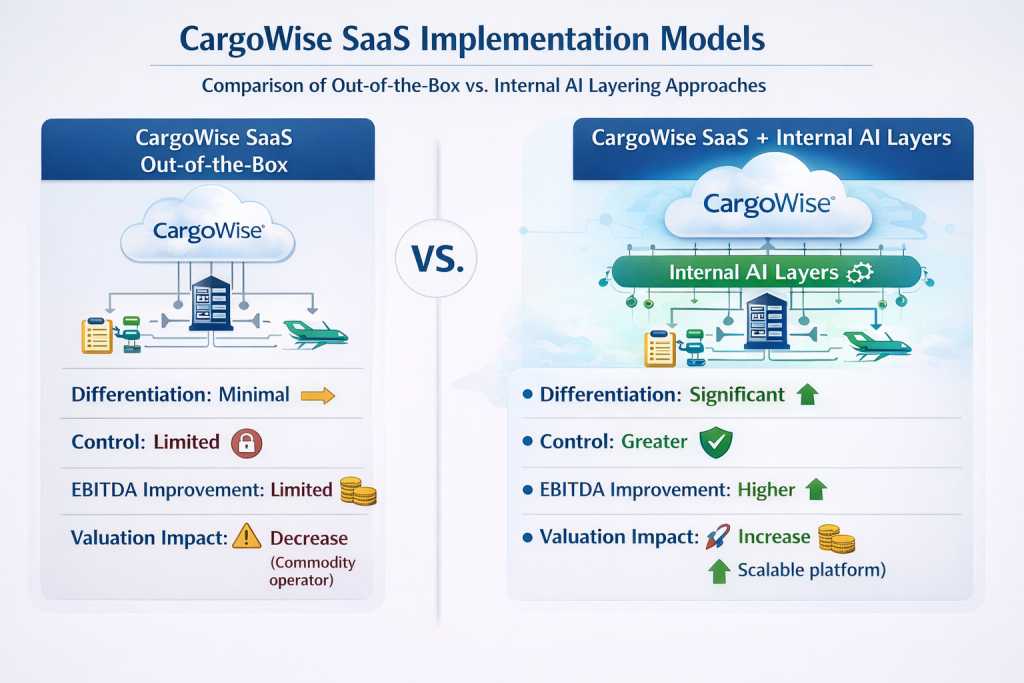
  • Does the implementation of CargoWise using their SAAS model decrease Enterprise Value?

    1. What CargoWise SaaS actually does to your business

    CargoWise under a SaaS model typically means:

    • You don’t own the system
    • You pay recurring fees (OPEX instead of CAPEX)
    • Core workflows become standardized
    • Data is structured, but not proprietary in itself

    So structurally, this is an outsourced model, not insourcing.

    2. Where EV can decrease

    Enterprise value is not just about EBITDA. Buyers also look at:

    • Differentiation
    • Control over processes
    • Scalability without external dependency

    Using CargoWise SaaS can reduce EV if it leads to this outcome:

    a) You become operationally efficient but not differentiated

    • Many forwarders use CargoWise
    • Your processes start to look like everyone else’s
    • Buyers see you as a commodity operator

    b) Savings are shared with the vendor

    • You reduce manpower
    • But ongoing SaaS costs increase
    • Net EBITDA improvement is limited

    c) Dependency risk increases

    • Pricing power sits with WiseTech Global
    • You don’t control roadmap or AI layers
    • Switching costs are high

    👉 In this case, valuation multiples can compress
    → You look like a process user, not a process owner

    3. Where EV can increase

    CargoWise can absolutely increase EV if used correctly:

    a) It improves EBITDA meaningfully

    • Faster billing
    • Lower leakage
    • Better working capital
    • Reduced headcount dependency

    b) You build on top of it

    • Internal workflows
    • AI layers
    • Customer-facing differentiation

    👉 Then CargoWise becomes infrastructure, not your value

    4. The key distinction (what investors look at)

    There are two very different forwarders:

    Forwarder A (lower EV impact)

    • Uses CargoWise “out of the box”
    • Standard workflows
    • Minimal customization
    • Relies on vendor ecosystem

    ➡️ Viewed as: Efficient operator, low strategic premium

    Forwarder B (higher EV impact)

    • Uses CargoWise as a core system
    • Builds:
      • Internal AI validation layers
      • Exception management tools
      • Customer-specific workflows
    • Owns process logic and data intelligence

    ➡️ Viewed as: Scalable platform, higher multiple

    5. Bottom line

    • CargoWise SaaS alone does not decrease EV
    • But using it passively can

    The real driver is this:

    If your value sits in the software → EV leaks
    If your value sits in how you use the software → EV increases
  • Revenue Leakage

    Post 3/3: ✅ A Smart Way to Stop Revenue Leakage

    The solution is to check every single job? Or automate the checking processes? FALSE. This is likely to flag too many jobs creating a very long list of false positives, overload the system, the user, and alert fatigue would set in.

    Forget rule-based automation that fails due to inconsistent charge codes. We took a different route: filter by gross margin outliers.

    📊 Step-by-step:

    1. Track job-level revenue, cost, and gross margin %. Create a list of averages by service and tradelane.
    2. Flag jobs with margins far below (or above) average (outliers)
    3. Deep-dive review only for flagged jobs
    4. Investigate unbilled services like customs inspection, port storage, etc.
    5. Tag root causes for recurring process gaps
    6. Perform period spot checks, especially for vendor rebates and recent cost renegotiations.

    This approach works – it’s scalable, data-driven, and minimizes false positives.

    Want to tighten your billing accuracy? Start with your margin outliers.

    And BTW, a list of averages will help operations with monthly forecasting.

    #RevenueLeakage #FreightERP #OperationalExcellence #BillingControl #MarginManagement #WorkingCapital #LogisticsFinance #FreightForwarding #Profitability #BillingErrors #SupplyChain #ProcessImprovement #mmlogistix

  • Revenue Leakage

    Post 2/3: ⚠️ Why Solving Revenue Leakage is Hard

    The biggest challenge? Inconsistency.


    Even with systems like CargoWise, when different people use different charge codes for the same service — e.g., “Trucking” vs. “Haulage” — it becomes impossible for the system to detect what’s missing.

    Add to that:

    • Manual workarounds
    • Unstructured exception handling
    • No reliable alert mechanism
    • Disjointed cost vs. billing visibility

    The result? Charges go unbilled. Margin erodes. Finance gets blindsided.

    #RevenueLeakage #FreightERP #OperationalExcellence #BillingControl #MarginManagement #WorkingCapital #LogisticsFinance #FreightForwarding #Profitability #BillingErrors #SupplyChain #ProcessImprovement #mmlogistix

  • Revenue Leakage

    Post 1/3: What is Revenue Leakage?

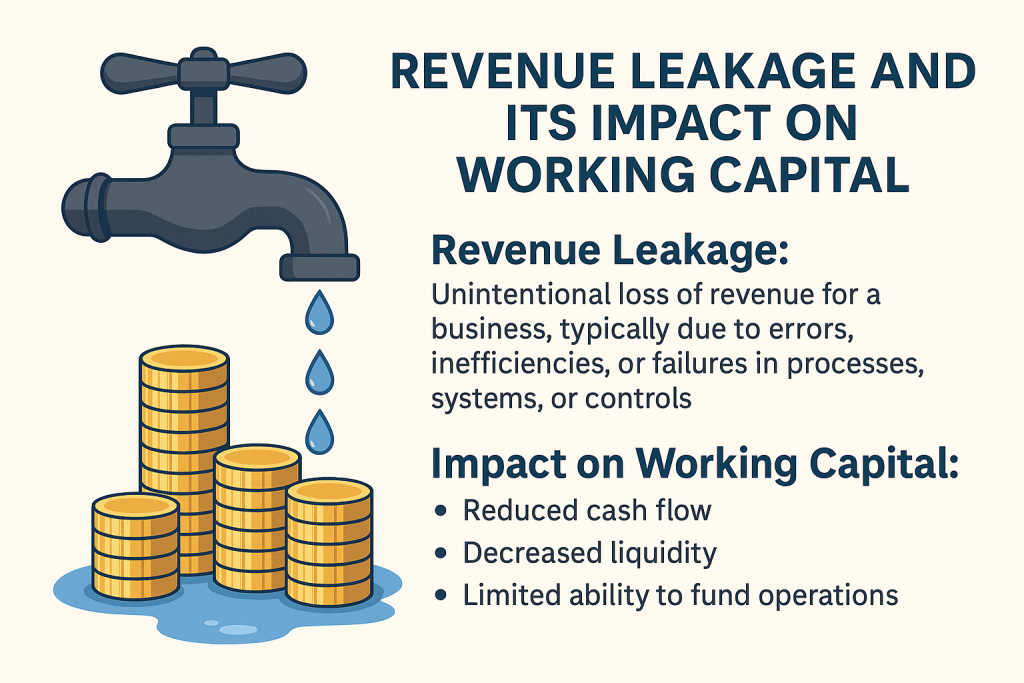
    Revenue leakage is the silent killer of profitability. It’s the revenue your company earns but never collects – often due to operational oversights, billing errors, or inconsistent processes.

    In freight forwarding and logistics, this can include:

    • Unbilled customs inspection fees
    • Missed detention/demurrage pass-through
    • Inconsistent documentation charges
    • Services rendered but not invoiced
    • Vendor rebates not applied

    It adds up – and it directly impacts cash flow, working capital, and bottom-line performance.

    🧩 Are you tracking your leaks?

    #RevenueLeakage #FreightERP #OperationalExcellence #BillingControl #MarginManagement #WorkingCapital #LogisticsFinance #FreightForwarding #Profitability #BillingErrors #SupplyChain #ProcessImprovement #mmlogistix