Tag: GlobalForwarding

  • Customer Service in the Freight Forwarding Industry

    Driving Trust Through Technology in Freight Forwarding

    In today’s hyper-competitive logistics landscape, technology is no longer a differentiator—it is a baseline expectation. Shippers demand visibility, accuracy, and integration, and forwarders that cannot meet these standards risk being sidelined. According to a McKinsey & Company report, digital adoption in logistics has accelerated by more than five years since the COVID-19 pandemic, with track-and-trace systems now considered essential rather than optional.

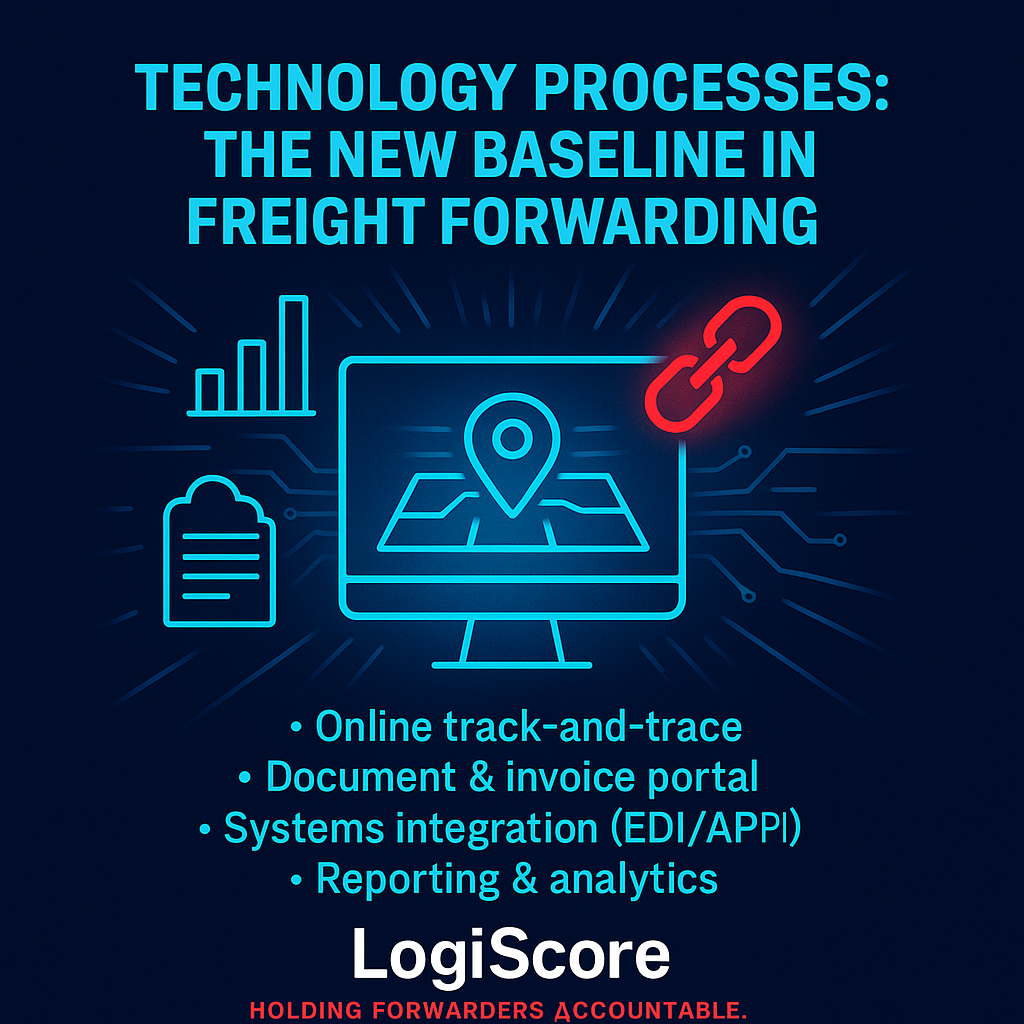
    Key Technology Processes That Matter

    1. Online Track-and-Trace
      Shippers expect real-time shipment visibility. Deloitte’s 2023 Global Supply Chain Survey found that 79% of supply chain leaders rank end-to-end visibility as a top priority. Failure to provide online tracking erodes trust and increases customer service costs.
    2. Document & Invoice Portals
      An online portal for shipment documents and billing reduces administrative bottlenecks, eliminates version errors, and accelerates dispute resolution. Gartner highlights that companies with automated documentation processes see a 30% reduction in billing disputes.
    3. Systems Integration (EDI/API)
      In an era of API-driven ecosystems, forwarders must be able to connect directly to their customers’ systems. According to Accenture, shippers that adopt integrated EDI/API solutions report 15–20% faster cycle times and fewer manual errors.
    4. Reporting & Analytics
      Regular reporting—weekly shipment summaries, KPI dashboards, or exception reports—has shifted from being a “value-add” to a non-negotiable standard. Shippers increasingly benchmark forwarders on the timeliness and accuracy of their reporting, using it as a measure of operational maturity.

    Why It Matters

    LogiScore emphasizes that forwarders are now judged not just by performance, but by transparency and accessibility of data. Technology processes underpin trust: they ensure accountability, reduce friction, and provide shippers with the control they demand.

    Forwarders that fail to offer these capabilities risk exclusion from RFPs and long-term contracts. By contrast, those that invest in robust digital processes position themselves as partners of choice in a data-driven supply chain.


    ✅ Industry References:

    • McKinsey & Company (2021). How COVID-19 has pushed companies over the technology tipping point.
    • Deloitte (2023). Global Supply Chain Survey.
    • Gartner (2022). The State of Supply Chain Digitalization.
    • Accenture (2022). Supply Chain Resilience through API Integration.
  • Customer Service in the Freight Forwarding Industry

    Customer Experience as a Differentiator in Freight Forwarding

    In global logistics, technology and networks are often viewed as the ultimate differentiators. Yet research consistently shows that customer experience (CX) remains the decisive factor in retaining shippers and winning new business. According to PwC, 73% of customers cite experience as an important factor in their purchasing decisions, second only to price and product quality. In freight forwarding—where margins are tight and services are commoditized—CX is increasingly the battleground.

    Why Customer Experience Matters in Logistics

    Shippers expect seamless, proactive, and industry-specific support. Delayed responses, lack of accountability, or unresolved issues directly affect supply chains, which in turn erode trust. McKinsey notes that companies delivering consistently excellent B2B experiences grow revenues 4–8% above their market. In logistics, this translates into measurable outcomes: reduced churn, higher wallet share, and stronger long-term contracts.

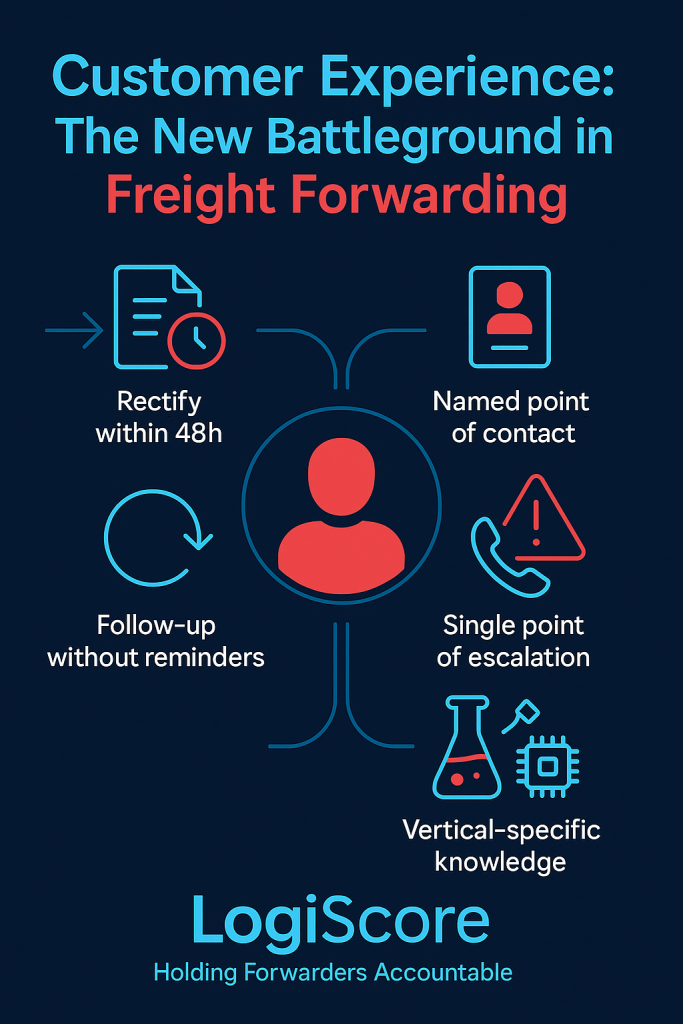
    Five Cornerstones of CX Excellence in Freight Forwarding

    1. Proactive Issue Management
      Forwarders who follow up without reminders demonstrate ownership. This reduces downtime and shows commitment to the customer’s business continuity.
    2. Fast and Accurate Rectification
      Documentation errors or invoice discrepancies must be corrected within 48 hours. Slow remediation not only damages trust but also risks customs penalties and cash-flow disruption.
    3. Named Points of Contact
      Having identifiable people responsible for operations and customer service—not generic mailboxes—adds accountability. Gartner research highlights that “named relationship managers” improve customer satisfaction scores by up to 30%.
    4. Single Point of Escalation
      Escalation paths must be clear and responsive. Shippers value not just problem solving, but the confidence that issues won’t vanish in a maze of departments.
    5. Professional, Sector-Specific Support
      Using the right language matters. A pharma shipper expects knowledge of GDP compliance; a chemicals shipper expects REACH awareness. Customer service should be vertical-specific, professional, and free of unnecessary jargon.

    The Competitive Edge

    Customer experience is not a “soft” differentiator; it is a hard metric tied to financial performance. For instance, Bain & Company reports that B2B companies excelling in CX grow revenues 10–15% faster and achieve higher margins. In forwarding, where many players offer the same port pairs and rates, the experience delivered at each touchpoint becomes the true differentiator.

    In short: CX in logistics is no longer optional—it is the foundation of resilience, retention, and reputation.

  • Customer Service in the Freight Forwarding Industry

    Documentation – The Invisible Backbone of Freight Forwarding

    In freight forwarding, speed and visibility often take the spotlight. Yet, behind every seamless shipment lies an element that too often goes unnoticed: documentation. Bill of ladings, house airway bills, and final invoices are not mere formalities—they are the invisible backbone of global trade. When documentation fails, supply chains stall. When documentation excels, trust compounds.

    According to the World Bank’s Logistics Performance Index, accuracy and timeliness of documentation are among the top enablers of efficient cross-border trade. In fact, a 2023 McKinsey study highlighted that incomplete or incorrect documents account for 15–20% of global shipment delays, leading to millions in demurrage, storage, and penalty fees annually. Documentation is not just an administrative function—it is a critical performance differentiator.

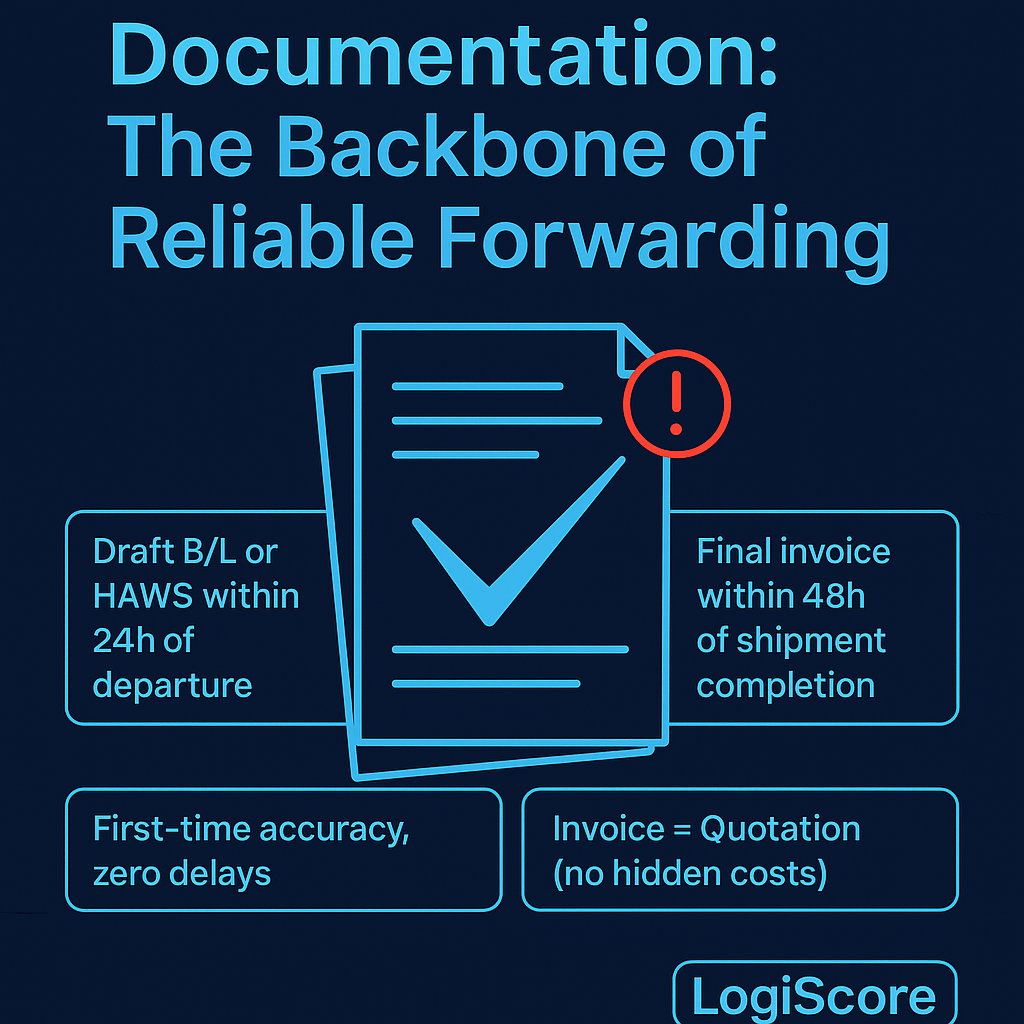
    Best-in-class forwarders demonstrate four consistent behaviors:

    • Issuing draft B/L or HAWB within 24 hours of departure ensures shippers can reconcile cargo movements with finance and compliance teams early.
    • Sending final invoices within 48 hours of shipment completion accelerates cash flow and eliminates uncertainty.
    • Submitting documentation accurately and completely on the first attempt, reducing costly customs queries or cargo holds.
    • Aligning the final invoice to the quotation, guaranteeing transparency, avoiding hidden costs, and building trust.

    For shippers, forwarders who excel in documentation are not just “vendors”—they are strategic partners. In an era where digitization and compliance are converging, shippers increasingly evaluate forwarders on their ability to deliver paperwork as efficiently as they move cargo. As digital trade corridors expand and e-documentation (such as eB/L) gains adoption, the leaders will be those who treat documentation not as a back-office function, but as a core component of customer experience.

    Documentation is precision. Documentation is accountability. And in logistics, documentation is the ultimate proof of reliability.

  • Customer Service in the Freight Forwarding Industry

    Why Shipment Management Defines Supply Chain Reliability

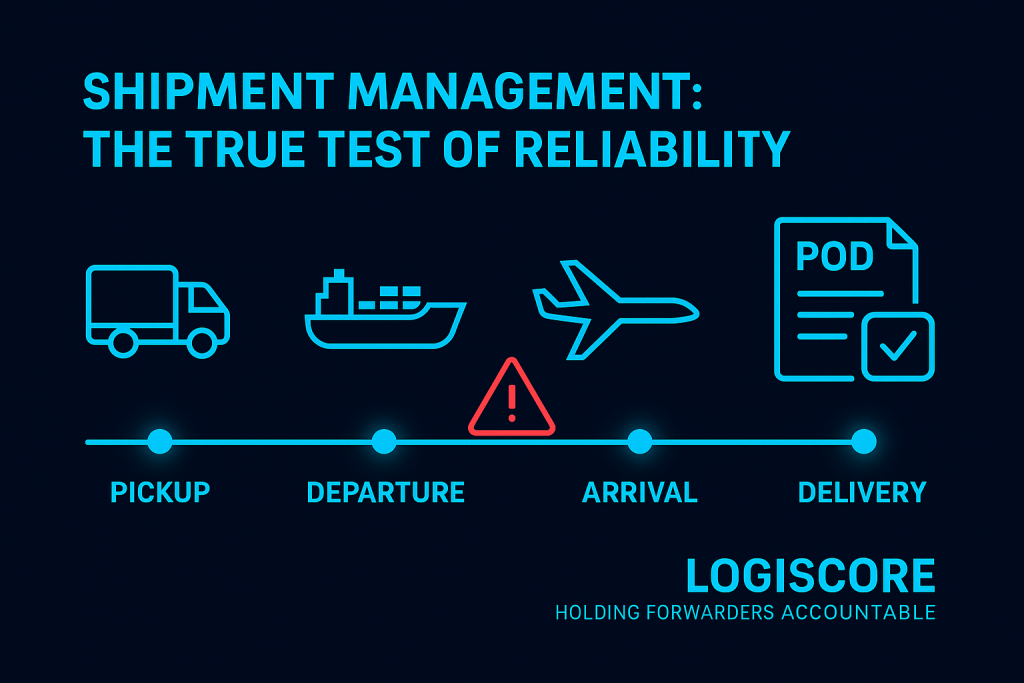
    In today’s interconnected logistics networks, shipment management is no longer a back-office function—it is the beating heart of supply chain reliability. Shippers expect forwarders to be proactive partners, not passive intermediaries. The difference between a good forwarder and an excellent one lies in how they manage visibility, communication, and contingency planning.

    From Reactive to Proactive

    Industry best practices emphasize proactive milestone updates—pickup, departure, arrival, and delivery—shared without being prompted. According to a McKinsey report, companies that embed proactive communication into their logistics operations improve customer satisfaction scores by up to 30%. Pre-alerts ahead of vessel ETA give consignees time to prepare, optimizing warehouse staffing and downstream distribution.

    Speed, Accuracy, and Accountability

    Proof of Delivery (POD) is a non-negotiable document in global trade. When provided within 24 hours of delivery, it accelerates billing cycles and reduces disputes. Research from Gartner highlights that delays in POD submission extend Days Sales Outstanding (DSO) by an average of 5–7 days, directly impacting working capital.

    Managing Disruptions

    No supply chain is immune to disruptions—weather, port congestion, and geopolitical events all test resilience. What differentiates a forwarder is not the absence of delays, but how quickly they notify shippers and offer recovery plans. The World Economic Forum stresses that transparency and speed in disruption management are now top criteria in selecting logistics partners.

    The New Standard

    Shippers increasingly evaluate forwarders on shipment management performance, not just rates. Platforms like LogiScore are giving voice to these expectations by holding forwarders accountable for proactive communication, documentation timeliness, and recovery planning.

    In a competitive marketplace, shipment management is no longer an operational detail—it is a strategic differentiator.


    📚 References

    • McKinsey & Company (2022). Transforming Customer Experience in Logistics.
    • Gartner (2023). Logistics Technology Trends: Visibility and Automation.
    • World Economic Forum (2023). Global Supply Chain Resilience Report.
  • Customer Service in the Freight Forwarding Industry

    Responsiveness in Freight Forwarding: The Overlooked KPI Driving Supply Chain Success

    When shippers evaluate freight forwarders, the usual yardsticks come to mind: cost competitiveness, service portfolio, technology platforms, and global reach. Yet in practice, one factor consistently determines whether partnerships succeed or fail: responsiveness.

    Why Responsiveness Matters

    Industry studies confirm this reality. A 2023 McKinsey & Company survey on supply chain resilience noted that more than 70% of shippers ranked “speed of response to issues” as a top-three factor in forwarder performance. Similarly, the Council of Supply Chain Management Professionals (CSCMP) highlights responsiveness as a cornerstone of customer experience in logistics, often outweighing price once baseline competitiveness is met.

    Responsiveness matters because:

    • Decisions are time-bound: Missing a sailing, booking slot, or aircraft capacity can translate into thousands of dollars in extra cost. Timely responses directly prevent revenue leakage.
    • Risk is dynamic: Customs detentions, port congestion, or strikes require fast escalation. According to FIATA, delays in communication are among the top three causes of supply chain disputes.
    • Trust is fragile: Even a short acknowledgement — “We have your request, response by 3pm” — signals accountability. This reassurance often carries as much weight as the eventual answer.

    Setting Benchmarks

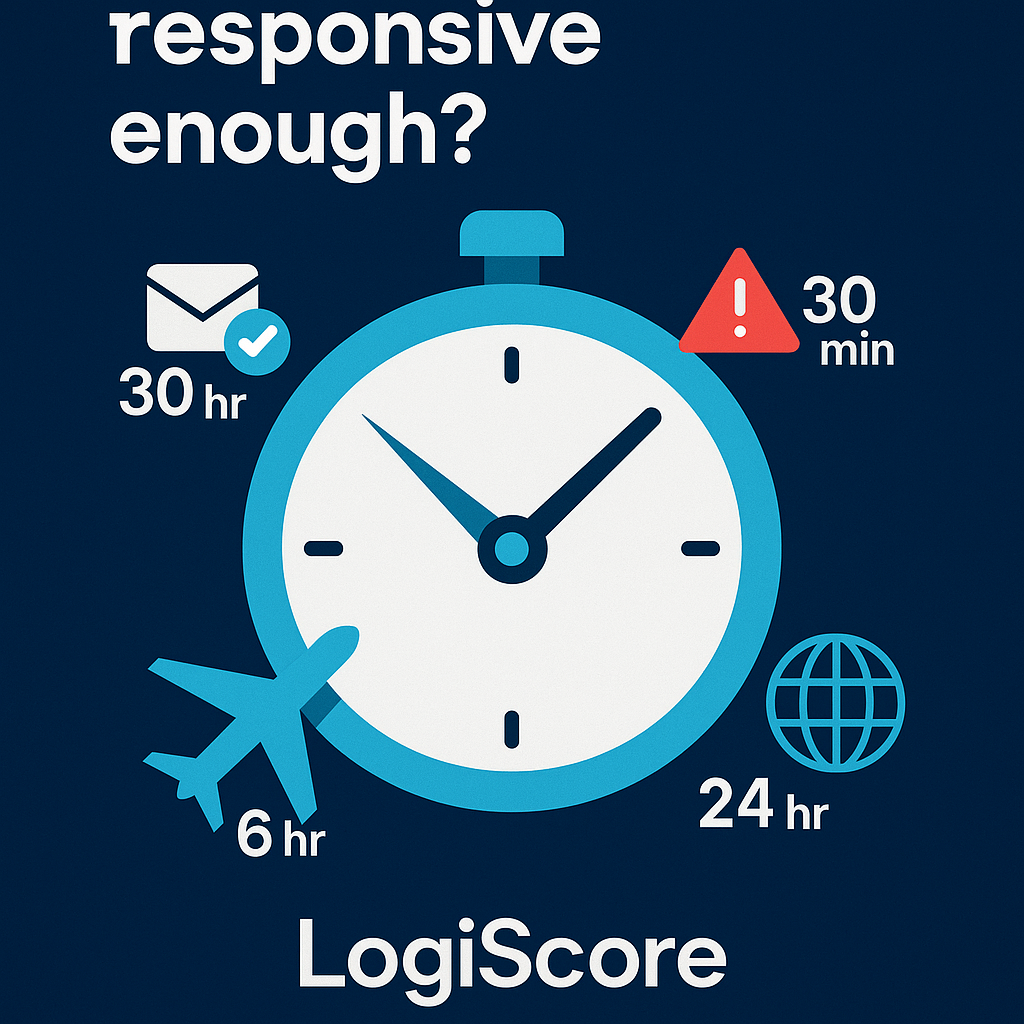
    While the industry lacks formal service-level standards, common benchmarks used by shippers include:

    • 30 minutes: Acknowledgement of quotation or information requests.
    • 6 hours: Full response to rate requests within the same region.
    • 24 hours: Full response to cross-regional rate requests (e.g., Asia–US, Europe–Latin America).
    • 30 minutes: Response time for emergencies (shipment delays, customs escalations, compliance flags).

    These benchmarks align with service levels promoted in many Reputation+ and Insights contracts between multinational shippers and forwarders.

    Beyond Systems: The Human Element

    Technology — from customer portals to chatbots — helps streamline responsiveness. But according to a 2022 Transport Intelligence (Ti) report, the strongest driver of shipper satisfaction remains human interaction: how account managers, operations staff, and customer service teams communicate under pressure.

    Responsiveness, therefore, is not just a process metric. It reflects culture. Organizations that empower staff to acknowledge issues quickly, set expectations transparently, and take ownership tend to outperform those that hide behind automated updates or bureaucratic structures.

    A Competitive Differentiator

    In an era where freight rates are increasingly commoditized, responsiveness has emerged as a competitive differentiator. Forwarders who respond faster than peers not only retain clients but often capture premium business where agility is valued over marginal cost differences.


    Conclusion
    Responsiveness is not a “nice-to-have.” It is a critical performance indicator that directly impacts cost, customer loyalty, and supply chain resilience. For shippers, building responsiveness expectations into RFQs and service contracts can help filter true partners from transactional providers. For forwarders, treating responsiveness as a measurable KPI may be the simplest path to differentiation in an increasingly crowded market.

  • 🚢 Large vs. Small Freight Forwarders: What Makes Them Tick?

    Post 7/7: What Happens When They Compete Outside Their Sweet Spot

    When small forwarders pursue large global clients:

    • They may underprice or overcommit.
    • Risk reputational damage if execution fails.
    • Lose focus on their core SME base.

    When large forwarders pursue small clients:

    • Clients may feel neglected or priced out.
    • Service personalization often suffers.
    • Internal processes may not suit transactional needs.

    Bottom line:
    The winners understand their lane—and stay in it or grow with clarity.

    #LogisticsLeadership #FreightForwarding #SupplyChainStrategy #LargeVsSmall #Forwarders #SME #GlobalForwarding #BusinessStrategy #CorporateStructure #FreightForwardingStrategy #ClientFit #ForwarderGrowth #BusinessScaling #CustomerCentricity #LocalExpertise #ForwarderTech #Digitization

  • 🚢 Large vs. Small Freight Forwarders: What Makes Them Tick?

    Post 6/7: What Small Forwarders Struggle With

    Trying to do everything often backfires.

    Common pitfalls:

    • Limited rate leverage
    • Overstretching into services beyond core strength
    • Fragmented tech stack
    • Dependency on key staff or clients
    • Difficulty competing in global tenders

    #LogisticsLeadership #FreightForwarding #SupplyChainStrategy #LargeVsSmall #Forwarders #SME #GlobalForwarding #BusinessStrategy #CorporateStructure #FreightForwardingStrategy #ClientFit #ForwarderGrowth #BusinessScaling #CustomerCentricity #LocalExpertise #ForwarderTech #Digitization

  • 🚢 Large vs. Small Freight Forwarders: What Makes Them Tick?

    Post 5/7: What Small Forwarders Do Well

    Small forwarders build trust through agility.

    Strengths include:

    • Tailored service delivery
    • Personal client relationships
    • Speed in quoting & execution
    • Success in underserved or emerging markets
    • Entrepreneurial problem solving

    #LogisticsLeadership #FreightForwarding #SupplyChainStrategy #LargeVsSmall #Forwarders #SME #GlobalForwarding #BusinessStrategy #CorporateStructure #FreightForwardingStrategy #ClientFit #ForwarderGrowth #BusinessScaling #CustomerCentricity #LocalExpertise #ForwarderTech #Digitization

  • 🚢 Large vs. Small Freight Forwarders: What Makes Them Tick?

    Post 4/7: What Large Forwarders Struggle With

    Size comes with trade-offs.

    Challenges include:

    • Inflexibility in service customizations
    • Slower response time for smaller clients
    • Complexity in internal processes
    • Less personal account management
    • Struggles in niche, low-volume lanes

    #LogisticsLeadership #FreightForwarding #SupplyChainStrategy #LargeVsSmall #Forwarders #SME #GlobalForwarding #BusinessStrategy #CorporateStructure #FreightForwardingStrategy #ClientFit #ForwarderGrowth #BusinessScaling #CustomerCentricity #LocalExpertise #ForwarderTech #Digitization

  • 🚢 Large vs. Small Freight Forwarders: What Makes Them Tick?

    Post 3/7: What Large Forwarders Do Well

    Large forwarders excel when the task is complex, global, or regulated.

    They shine in:

    • Serving multinational clients
    • Managing high-volume, multi-lane shipments
    • Delivering standardized SOPs
    • Investing in automation, ESG, and innovation
    • Winning and running RFQs

    #LogisticsLeadership #FreightForwarding #SupplyChainStrategy #LargeVsSmall #Forwarders #SME #GlobalForwarding #BusinessStrategy #CorporateStructure #FreightForwardingStrategy #ClientFit #ForwarderGrowth #BusinessScaling #CustomerCentricity #LocalExpertise #ForwarderTech #Digitization