At TechWeekSingapore2026, I have been looking at technologies from the perspective of freight forwarding and logistics: What operational problem does this actually solve?
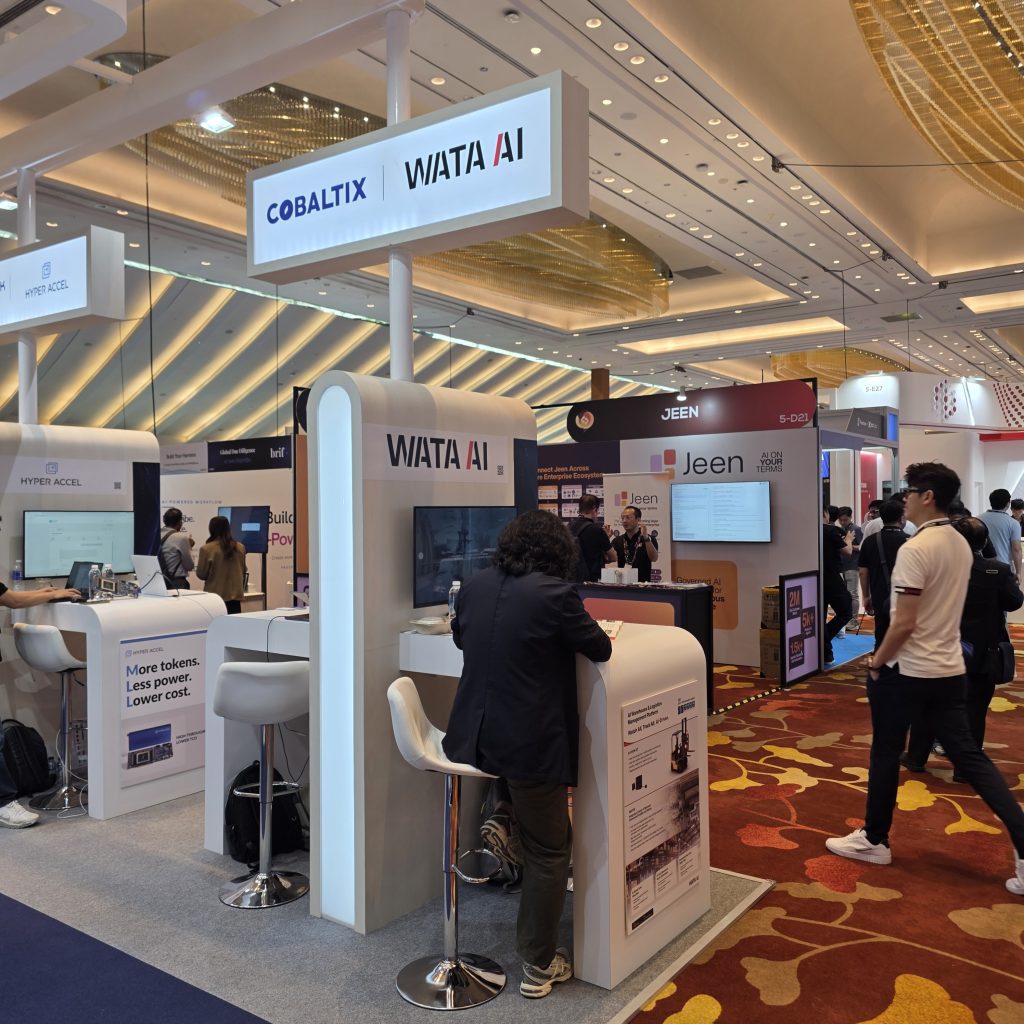
My first stop was WATA AI / WATON (https://www.wata-ai.com/en/waton).
The core value proposition appears to sit alongside the WMS rather than replacing traditional WMS functionality.
There are two distinct applications.
1. Physical handling accuracy
WATA addresses the physical execution layer of warehouse operations:
• Putaway accuracy: verifying that the correct pallet is placed in the correct pallet location.
• Inventory accuracy: checking what pallet is physically located at each pallet position.
• Outbound accuracy: verifying that the correct pallet is retrieved and despatched.
Pallets do not necessarily require a barcode, although identification would improve the process.
The current application therefore appears best suited to homogeneous products with known and defined pallet configurations.
This distinction is important: a WMS knows where a pallet should be. WATA is trying to establish whether the physical pallet is actually there.
2. Digital twin and warehouse optimisation
The warehouse can be modelled digitally to analyse:
• current productivity and material flows;
• as-is versus to-be scenarios;
• alternative warehouse and racking configurations, including adjustable pallet racking systems;
• the productivity impact of layout changes before physically implementing them.
This takes the application beyond accuracy and control into warehouse engineering and continuous improvement.
Current limitations
Based on the solution demonstrated to me, there are some limitations to consider:
• The current solution appears better suited to single-user warehouse environments. Multi-user operations with different customers, SKUs and handling requirements introduce considerably more complexity.
• Inventory, putaway, picking and outbound verification currently operate at full-pallet level.
• FIFO, LIFO, batch and expiry-date control become problematic where two pallets containing the same SKU and having the same pallet configuration are physically interchanged. The system cannot independently determine inbound date, batch number or expiry date from the pallet configuration alone.
Overall, it was interesting to see technology addressing the physical accuracy gap between what the WMS records and what is actually happening on the warehouse floor.
It’s good to see solutions being developed specifically around logistics operations, and I hope we see more technology providers addressing the particular challenges of freight forwarding and logistics over time.